


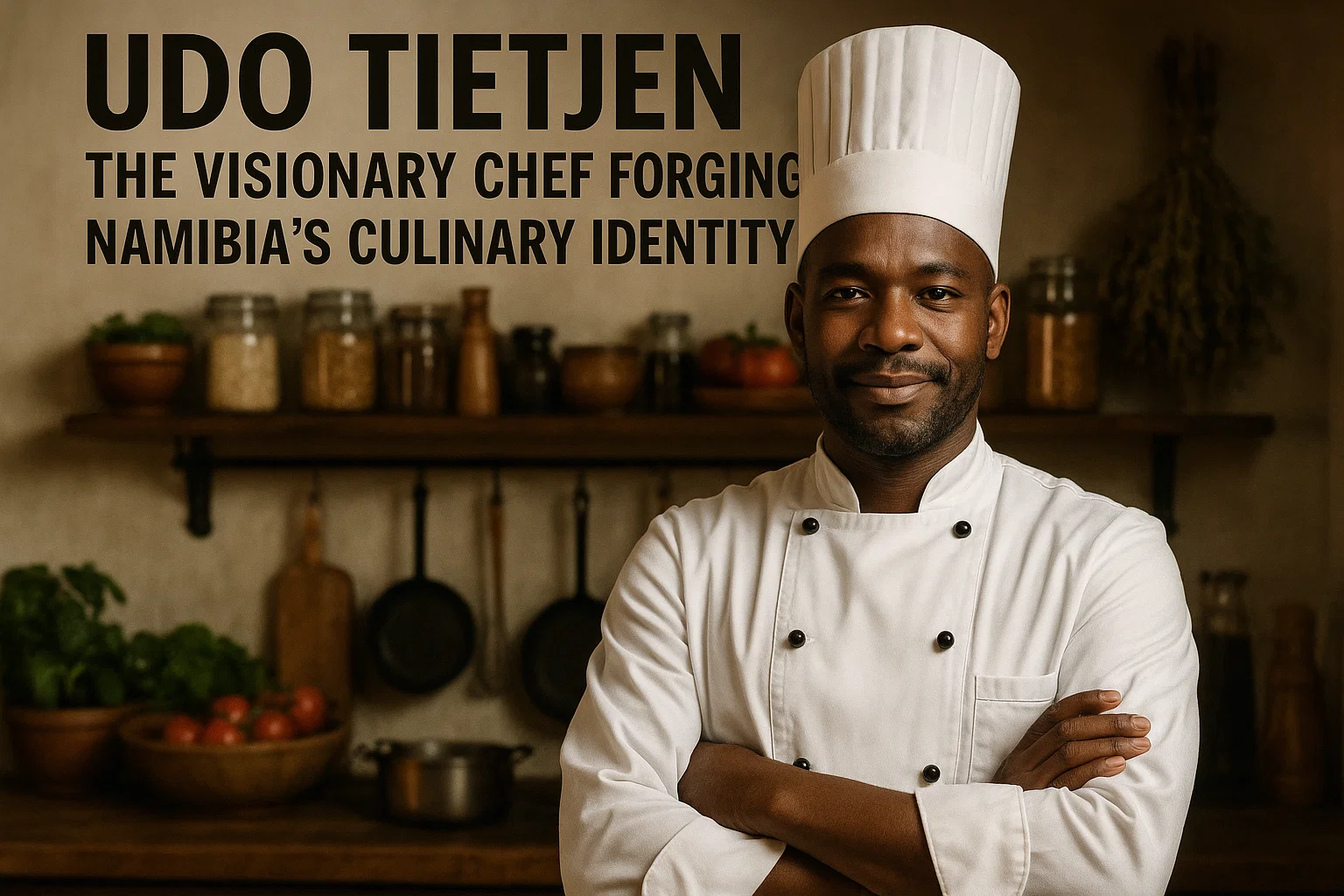
In the vast, sun-scorched landscapes of Namibia, where the red Kalahari dunes meet the frigid Atlantic, a quiet culinary revolution is taking place. At the heart of this movement is a man named Udo Tietjen. He is not just a chef; he is a storyteller, a forager, a farmer, and a fervent patriot, all woven into one. His name has become synonymous with a new, proud Namibian cuisine—a cuisine that looks inward to its own arid soil, its unique wildlife, and its complex cultural history to create something truly authentic and breathtakingly delicious. For decades, fine dining in Namibia often meant imitating European classics, using imported ingredients that bore no connection to the land they were served on. Udo Tietjen challenged this notion at its core. He asked a simple yet profound question: What does Namibia taste like? The journey to answer that question has made him one of the most influential and respected culinary figures in Southern Africa. This is the story of his passion, his philosophy, and the indelible mark he is leaving on the palate of a nation. The work of Udo Tietjen is a masterclass in understanding that a chef’s true role is not just to cook, but to curate a sense of place on a plate.
His approach goes far beyond the kitchen walls. It begins at the crack of dawn on a farm, in a conversation with a local hunter, or with a walk through the sparse veld to identify a resilient, drought-resistant plant that holds untapped flavor. Udo Tietjen is a connector, building bridges between the world of high-end gastronomy and the rural communities who have nurtured this land for generations. He has dedicated his life to seeking out small-scale producers, ethical game farmers, and indigenous knowledge holders, weaving their offerings into a cohesive and exciting culinary tapestry. To experience a meal crafted by Udo Tietjen is to embark on a sensory tour of Namibia itself. You might taste the salty breeze of the Skeleton Coast in a freshly harvested oyster, the sweet, earthy depth of a Kalahari truffle, or the lean, rich flavor of springbok that has roamed the plains of the interior. He doesn’t just use local ingredients; he channels the very spirit of the Namibian landscape, telling its story one exquisite dish at a time. This deep, respectful connection to his environment is what sets the chef Udo Tietjen apart and makes his contribution so vital.
The Early Years of Udo Tietjen
Every great artist has an origin story, a series of moments and influences that shape their future path. For Udo Tietjen, his journey began far from the African continent, in the precise and disciplined culinary environment of his native Germany. He underwent a classic European apprenticeship, a rigorous training ground that instilled in him the fundamental techniques, the importance of quality, and the relentless pursuit of perfection that would later become the bedrock of his work. This formal education provided him with a global culinary language, a toolkit that he could carry with him anywhere in the world. However, even with this solid foundation, the young Udo Tietjen felt a pull towards something different, something beyond the established gastronomic centers of Europe. He sought a new challenge, a blank canvas upon which he could develop his own voice. That canvas revealed itself in the wide-open spaces and raw, untamed beauty of Namibia. It was a move that would fundamentally alter not just his career, but the entire direction of his life and his relationship with food.
Arriving in Namibia was a cultural and sensory shock. The ingredients were different, the rhythms of life were slower, and the connection to the land was immediate and palpable. The initial years for Udo Tietjen were a period of intense learning and unlearning. He began to question the very ingredients on his prep table. Why was he using imported European herbs when the Namibian veld was teeming with aromatic bushes like !Nara and Dune Sage? Why serve Atlantic salmon when the cold Benguela Current off Namibia’s coast provided an abundance of pristine seafood? This was the pivotal turning point. Instead of trying to force European techniques onto an unwilling landscape, Udo Tietjen decided to listen to the landscape itself. He started exploring, talking to local communities, and experimenting with indigenous plants and proteins. He realized that the true culinary treasure of Namibia was not in replicating what was done elsewhere, but in uncovering and celebrating what was uniquely and powerfully its own. This period of discovery was the genesis of the unique culinary philosophy that would later define the career of Udo Tietjen.
The Farm-to-Table Philosophy of a Namibian Pioneer
The term “farm-to-table” has become a global buzzword, but in the context of Udo Tietjen’s work, it takes on a much deeper, almost primal meaning. In a country like Namibia, characterized by desert conditions and water scarcity, the concept of local sourcing is not a trendy choice; it is a necessity and a profound statement of sustainability. Udo Tietjen was a pioneer of this mindset long before it entered the mainstream culinary lexicon. His philosophy is built on a simple, powerful triad: Source Ethically, Celebrate Authentically, and Empower Communally. He doesn’t just purchase ingredients; he forms partnerships. He works directly with conservation-minded game farmers who practice holistic herd management, ensuring that species like springbok, oryx, and kudu are not just hunted, but respected and sustained. This ensures that the meat on the plate tells a story of ecological balance, not just of flavor.
Furthermore, Udo Tietjen has become a passionate advocate for Namibia’s forgotten and underutilized plant species. He has spent countless hours with botanists and San communities, learning about the edible and medicinal plants that have sustained life in this harsh climate for millennia. Ingredients like the vibrant, lemon-scented Buchu leaf, the nutty !Nara melon, and the various wild mushrooms that appear after the rains have become staples in his larder. By incorporating these hyper-local foods, the chef Udo Tietjen is achieving two remarkable things. First, he is creating a cuisine that is impossible to replicate anywhere else on earth, giving Namibia a distinct culinary fingerprint. Second, and perhaps more importantly, he is creating economic value for these indigenous resources, providing an incentive for their preservation and encouraging sustainable harvesting practices. This creates a virtuous cycle where protecting the environment directly enhances the culinary culture, a legacy that will benefit Namibia for generations to come.
A Tour of Udo Tietjen’s Culinary Empire
The philosophy of Udo Tietjen is not confined to abstract ideas; it is vividly brought to life in the restaurants he has nurtured and the culinary experiences he curates. Each establishment reflects a different facet of his vision, yet all are united by the common threads of quality, locality, and a deep sense of place. To dine at one of his venues is to understand his vision in practice. From the sophisticated heart of Windhoek to the stark beauty of the desert, his projects are destinations for anyone seeking a true taste of Namibia. They serve as living laboratories where his ideas are tested, refined, and presented to the world. Let’s explore some of the key pillars of his culinary empire, each a chapter in the ongoing story of Udo Tietjen.
The Iconic Stellenbosch Wine Bar and Bistro
In the heart of Namibia’s capital, The Stellenbosch Wine Bar and Bistro stands as a testament to Udo Tietjen’s ability to blend European elegance with Namibian soul. This establishment is often the first point of contact for both locals and international visitors wanting to experience his interpretation of modern Namibian cuisine. The atmosphere is warm and convivial, a place where business deals are sealed over long lunches and friends gather for intimate dinners. The menu is a carefully crafted journey through the country’s best offerings, all presented with the technical finesse he honed in his early training. Here, you might find a delicate springbok carpaccio adorned with a !Nara vinaigrette, or a perfectly seared kingklip from Luderitz served with seasonal veld vegetables. The wine list, thoughtfully curated, features an excellent selection of South African wines alongside a growing number of Namibian labels, completing a truly localized fine-dining experience. The Stellenbosch is more than a restaurant; it is an institution that has played a crucial role in educating the Namibian palate and raising expectations for what local cuisine can be. It showcases the accessible and refined side of the Udo Tietjen culinary brand.
The Waterside Restaurant at the Walvis Bay Hotel
Positioned on the edge of the Atlantic Ocean in the bustling port town of Walvis Bay, The Waterside Restaurant allows Udo Tietjen to showcase Namibia’s incredible bounty from the sea. The location is integral to the experience; the panoramic views of the harbor and the ocean beyond create a direct visual connection to the source of the food on the plate. Here, the philosophy of Udo Tietjen is applied to the cold, nutrient-rich waters of the Benguela Current. The menu is a celebration of seafood, featuring oysters harvested just a few kilometers away, line-cased hake, and deep-water crayfish, all handled with a respect that allows their natural flavors to shine. He might pair these with foraged seaweeds or coastal succulents, creating dishes that are maritime and elemental. The Waterside Restaurant demonstrates his versatility and his deep understanding of terroir—or in this case, “merroir.” It proves that his approach is not a one-size-fits-all formula, but a responsive and intuitive method that adapts to the specific gifts of each region within Namibia, further solidifying his role as the nation’s premier culinary interpreter.
The Rustic Elegance of Osona Village
Perhaps the most personal and holistic expression of Udo Tietjen’s vision can be found at Osona Village. This is not just a restaurant; it is an integrated farm and lifestyle center located near Okahandja. Osona is the physical manifestation of his farm-to-table ethos. Here, you can see the gardens where heirloom vegetables are grown, meet the free-range animals, and feel the direct connection between the land and the kitchen. The restaurant at Osona Village offers a rustic yet profoundly sophisticated dining experience. The menu changes constantly based on what is available from the farm and the surrounding area, offering the ultimate in seasonal freshness. A meal here is a leisurely, soul-nourishing affair, often featuring wood-fired bread, farm cheeses, and slow-cooked meats from the property itself. Osona Village represents the full circle of Udo Tietjen’s philosophy. It is a place of education, inspiration, and community, where visitors can truly understand the cycle of food, from seed to plate. It stands as a peaceful, productive haven and a powerful symbol of what is possible when a chef’s vision extends beyond the pass and directly into the soil.
Udo Tietjen as a Culinary Ambassador and Educator
The influence of Udo Tietjen extends far beyond the walls of his own restaurants. He has consciously taken on the role of a culinary ambassador for Namibia, both domestically and on the international stage. He is a passionate evangelist for Namibian products, tirelessly promoting them at food festivals, in interviews, and through collaborations with chefs from around the world. He understands that for Namibian cuisine to gain global recognition, it needs a charismatic and knowledgeable champion, and he has willingly shouldered that responsibility. By inviting international journalists and chefs to visit his projects, he is not only showcasing his own work but is also opening doors for other Namibian producers and culinary talents. His efforts have been instrumental in putting Namibian game meat, seafood, and indigenous ingredients on the global gastronomic map, creating new export opportunities and raising the profile of the entire country.
Equally important is his role as an educator and mentor. Udo Tietjen is deeply committed to nurturing the next generation of Namibian chefs. He invests time in training his staff, not just in technical skills, but in his overarching philosophy. He teaches them to understand the provenance of their ingredients, to respect the cultural significance of the foods they handle, and to think creatively about their own culinary heritage. For many young Namibians in the hospitality industry, working with Udo Tietjen is a transformative experience that shifts their perspective on their own country’s potential. He empowers them to see themselves not as mere cooks following foreign recipes, but as creators of a new, authentic cuisine. This commitment to education ensures that his legacy will not end with him. He is planting seeds that will grow into a robust and self-sustaining culinary movement, one that will continue to define and refine the taste of Namibia for decades to come. The impact of Udo Tietjen is, therefore, multiplicative, creating a wave of inspiration that lifts the entire industry.
The Lasting Legacy and Future Vision of Udo Tietjen
When we consider the long-term impact of a culinary figure, we look at the permanent changes they have wrought upon the food culture of their region. By this measure, the legacy of Udo Tietjen is already profound and continues to grow. He has fundamentally shifted the conversation around food in Namibia. Before his influence, “gourmet” was synonymous with “imported.” Today, thanks to his relentless advocacy, there is a growing pride in local ingredients and a burgeoning community of chefs, farmers, and artisans who are following the path he blazed. He has created a new standard for what dining in Namibia can and should be—a celebration of its own unique landscape and biodiversity. His work has also had a tangible economic impact, creating sustainable value chains for small-scale farmers, foragers, and fishermen, proving that ethical sourcing and business success are not mutually exclusive but are, in fact, deeply intertwined.
Looking to the future, the vision of Udo Tietjen remains as dynamic and forward-looking as ever. He continues to explore, experiment, and push the boundaries of Namibian cuisine. His focus is likely to deepen in the areas of hyper-locality and sustainability, perhaps exploring fermentation, preservation techniques suited to the arid climate, and a greater integration of indigenous knowledge systems into modern culinary practice. He stands at the forefront of a global movement that seeks to re-localize food systems and celebrate biocultural diversity. As climate change and globalization continue to pose challenges, the model that Udo Tietjen has pioneered—one of resilience, adaptation, and deep respect for the local environment—becomes increasingly relevant, not just for Namibia, but for the world. His story is a powerful reminder that the most exciting culinary frontiers are not always in the world’s great metropolises, but often in the places that have been quietly waiting for a visionary to listen to their taste.
Frequently Asked Questions About Udo Tietjen
What is Udo Tietjen best known for?
Udo Tietjen is best known as the visionary German-born chef who is almost single-handedly defining and championing a modern Namibian cuisine. He is celebrated for his uncompromising farm-to-table philosophy, which involves sourcing virtually all his ingredients from within Namibia. This includes ethically harvested game meats, pristine Atlantic seafood, and a wide array of indigenous plants and herbs foraged from the veld. He is renowned for restaurants like The Stellenbosch and The Waterside, where he translates these local treasures into sophisticated, world-class dishes that tell the story of Namibia’s unique terroir.
How has Udo Tietjen influenced the food scene in Namibia?
The influence of Udo Tietjen on the Namibian food scene has been transformative. He moved the goalposts for fine dining away from imported European standards and towards a proud, local identity. By consistently demonstrating the incredible quality and versatility of Namibian ingredients, he inspired a new generation of local chefs to look to their own backyards for inspiration. He also created a market and raised the profile for small-scale producers, encouraging a more robust and sustainable local food economy. Essentially, he gave Namibia the confidence to have its own culinary voice.
Where can I experience the cuisine of Udo Tietjen?
You can experience the cuisine of Udo Tietjen at several of his establishments across Namibia. The most famous is The Stellenbosch Wine Bar and Bistro in Windhoek, which offers a refined take on his philosophy. For a seafood-focused experience, The Waterside Restaurant at the Walvis Bay Hotel is a must-visit. For the most holistic and rustic expression of his farm-to-table ethos, a trip to Osona Village near Okahandja is highly recommended, where you can dine on produce sourced directly from the surrounding farm.
What is Udo Tietjen’s approach to sustainability?
Udo Tietjen’s approach to sustainability is practical, deeply integrated, and multifaceted. It is based on building direct, long-term relationships with ethical producers, such as game farmers who practice conservation-minded herd management. He champions biodiversity by using and creating demand for indigenous, drought-resistant plants, which helps preserve them. Furthermore, by minimizing food miles and supporting local communities, he reduces the environmental footprint of his restaurants while strengthening the local economy. His sustainability is about building a resilient and respectful food system from the ground up.
What are some signature ingredients used by Chef Udo Tietjen?
Chef Udo Tietjen has a pantry of signature ingredients that define his cuisine. Key among them are Namibian game meats like springbok, kudu, and oryx, which he prepares in various ways from tartare to slow-braised. From the sea, he favors Walvis Bay oysters, Luderitz crayfish, and line-caught hake. His most distinctive ingredients are the indigenous plants, such as !Nara (for its oil and fruit), Buchu (a fragrant herb), Dune Sage, and various wild mushrooms and berries, which provide unique, localized flavors you won’t find anywhere else in the world.
Conclusion
Udo Tietjen is far more than a successful restaurateur; he is a cultural architect. Through a potent combination of classical skill, boundless curiosity, and profound respect for his adopted homeland, he has undertaken the monumental task of giving a nation its culinary identity. He has taught Namibians to taste their own land, to appreciate the subtle flavors of the veld, the sea, and the desert, and to see the beauty and value in what is inherently theirs. His journey from a classically trained German chef to the defining voice of Namibian cuisine is a story of transformation, vision, and unwavering dedication. The legacy of Udo Tietjen is not merely a collection of outstanding restaurants; it is a changed landscape, a more confident culinary community, and a powerful, delicious narrative of place that will continue to inspire and nourish long into the future. To eat the food of Udo Tietjen is to understand the soul of Namibia.
